Choose Your Language:
Posted by: The Sumaira Foundation in Community, NMOSD, Patient, Voices of TSF
In October 2022, I was aboard a flight from Copenhagen to Chicago when I began experiencing violent, intractable hiccups. These were nothing like ordinary hiccups. The spasms were relentless, causing my entire body to jerk and at times nearly taking my breath away. The flight crew recognized my distress and worked together to help me. I remain grateful for their compassion. I had no idea that those frightening moments would become an important clue to a rare neurological condition.
Rare disease was not unfamiliar to me. In 1997, a muscle biopsy led to a diagnosis of mitochondrial myopathy. In 2007, I underwent brain surgery for Arnold Chiari I malformation. My scientific background taught me to value questions and research, but knowledge could not prepare me for what happened next.
The hiccups were followed by persistent vomiting, severe headaches, and neurological changes. On October 31, 2022, I was admitted to the hospital. Numbness spread from my legs to my waist. MRI revealed extensive inflammation along my spinal cord. Walking was no longer something I could take for granted.
My physicians moved quickly with intravenous steroids and plasma exchange, or PLEX, while investigating the cause. Specialized blood tests were sent to Mayo Clinic. At the time, several diagnoses were under consideration, including NMOSD and MOGAD. I understood the medical terminology, but I was still the patient in the bed waiting for answers.
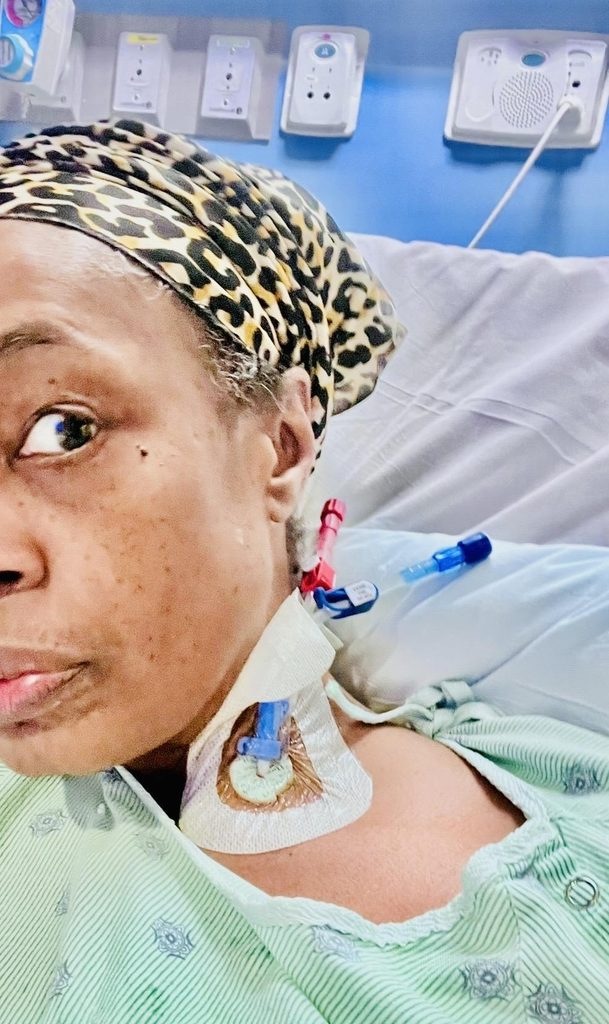
Receiving plasma exchange (PLEX) treatment during my hospitalization
On November 18, a photograph captured the whiteboard in my hospital room. It listed the possibilities my team was investigating. Looking at it today reminds me how much uncertainty can fit into a single moment, and how important it is to have medical professionals who listen, investigate, and act.
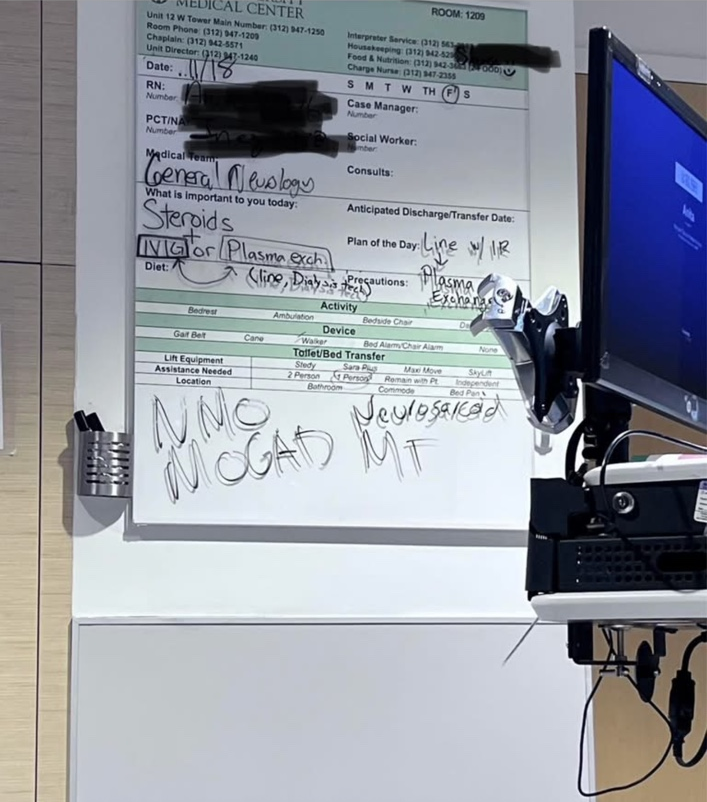
My hospital whiteboard, November 18, 2022
By Thanksgiving, I had been in the hospital for nearly a month. Because of COVID restrictions, my grandson could not visit me on the hospital floor. I missed my daughter and grandson terribly. What I did not know was that my daughter had arranged a surprise with the nursing staff. Someone told me I had a special visitor and escorted me downstairs. I kept my mask on, and there they were, waiting for me.
We shared Thanksgiving together downstairs at Rush. My daughter brought homemade food, and when I returned upstairs, everyone wanted a taste because it smelled so good! Later that evening, I enjoyed a second Thanksgiving meal from the hospital. I was grateful for both meals, but the true gift was being able to spend that time with my family.
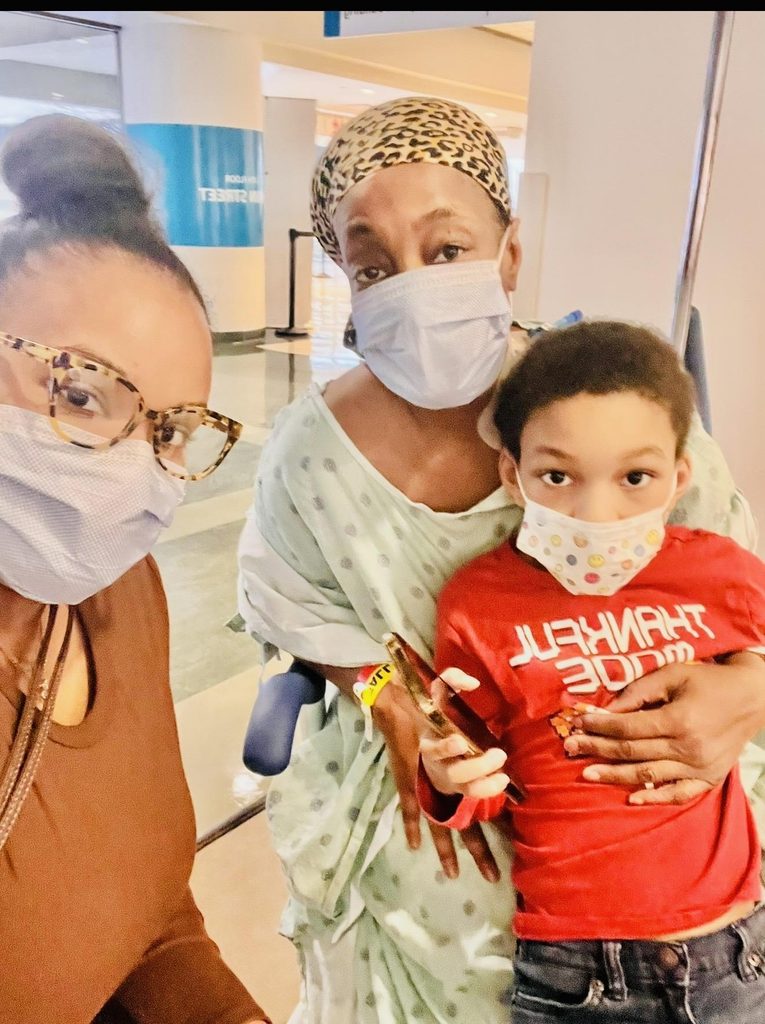
Thanksgiving with my daughter and grandson at Rush
I returned home on November 30, 2022. On December 2, I received my diagnosis of aquaporin-4 antibody-positive neuromyelitis optica spectrum disorder (NMOSD), my third rare medical condition. My first NMOSD infusion followed on December 30.
Today, I am still numb from my waist to my feet. I live with the daily effects of transverse myelitis, inflammation of the spinal cord that can occur with NMOSD and leave lasting neurological symptoms. I also experience a constant hugging, burning sensation around my torso, a form of neuropathic pain that is present 24 hours a day. It has its peaks and valleys, but it never completely goes away. Yet I still walk. I want people to understand that walking does not mean the neurological damage or the challenges have disappeared. My days require adjustments, and what others see does not always reflect what my body is experiencing.
I am deeply grateful for the neuroimmunologists and neurologist who have guided my care, and for the people who have supported me along the way. I also appreciate Amgen’s Patient Advocate Liaison (PAL), who helped me navigate the infusion process, and the opportunities for learning and connection through its Patient Support Forums.
I encourage people to be curious and prepared when they visit their doctors. Write down questions and symptoms. Ask about treatment options. Seek clarification when something does not make sense, and seek a second opinion when needed. We are partners in our healthcare, and being informed helps us participate more fully in decisions about our lives.
I believe in caring for the whole person: nourishing our bodies with a healthy diet, nurturing a positive spirit, embracing love and family, and finding joy wherever we can. None of these replaces appropriate medical care, but each can be part of how we care for ourselves while living with a chronic condition.
Becoming The Sumaira Foundation’s 100th Ambassador, representing Illinois, gave me another way to share what I have learned. I also serve as moderator of a Human Collective Project support group. Through our support group discussions, I’ve learned about different approaches that other NMOSD patients have found helpful in managing neuropathic pain. These conversations remind me of the importance of sharing our experiences, remaining curious, and continuing to learn from one another. I have met people whose experiences with NMOSD, MOGAD, and other rare conditions are different from mine. Some have waited years for a diagnosis. Some have lived with profound disability. Their experiences deserve to be heard.
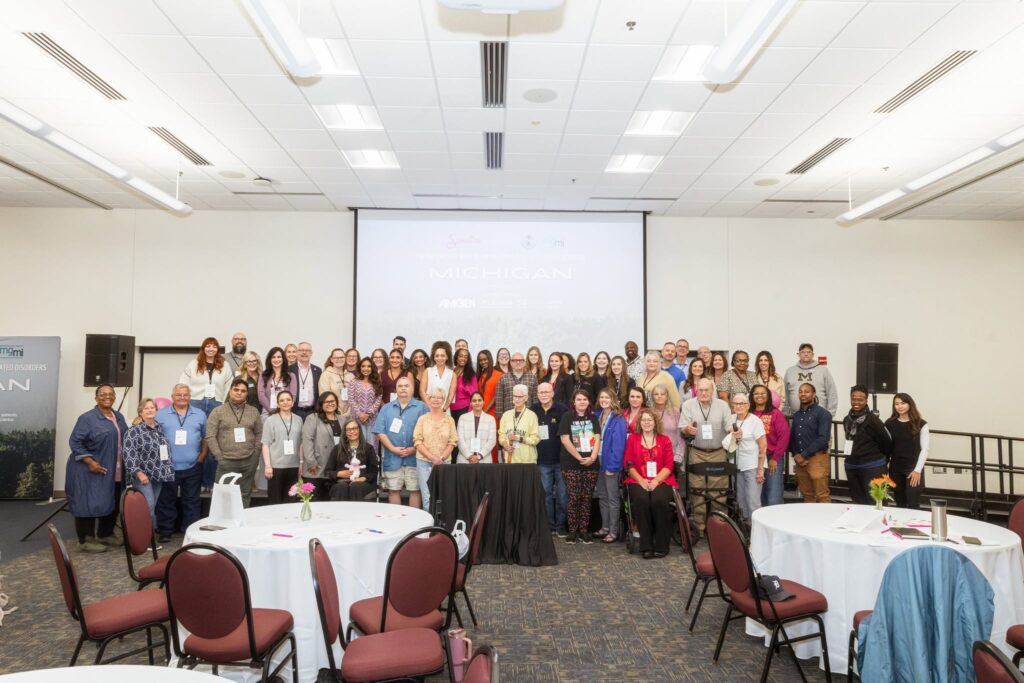
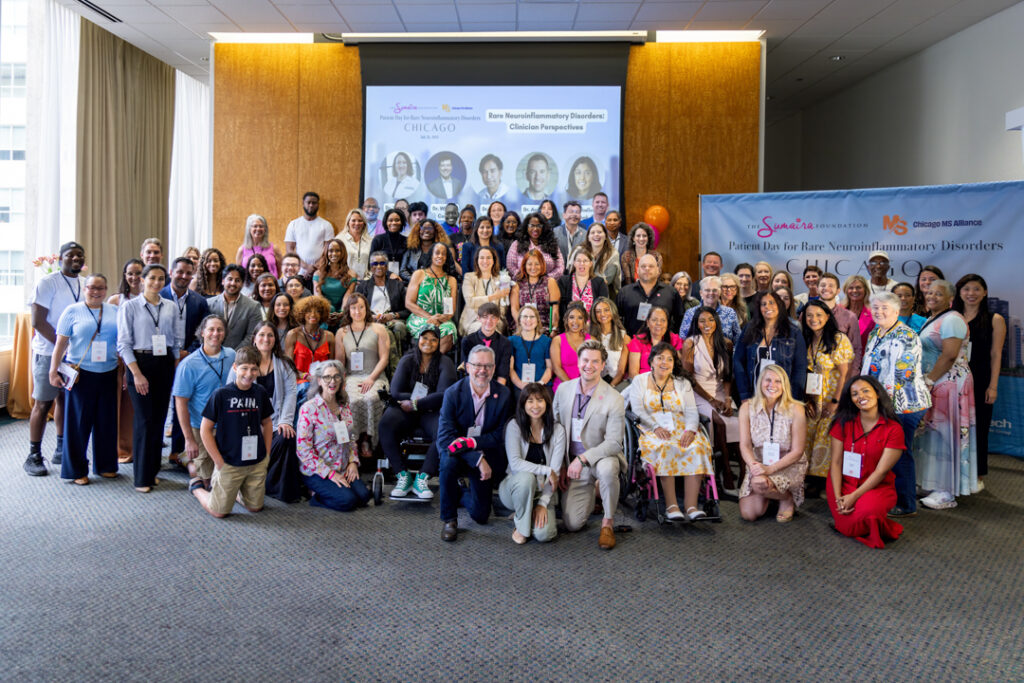
At TSF Patient Day Chicago in 2025 and Patient Day Michigan in 2026, I had opportunities to connect, listen, and share. Those experiences reinforce something I believe deeply: our stories can help someone ask a question, seek care, or feel understood. My personal philosophy is HOME: Helping Others Mobilize and Empower.
Living with NMOSD has taught me that resilience is not always about pushing forward. Sometimes it means adapting, recognizing limitations, and discovering different ways to pursue what matters.
I believe we should remain curious, continue learning, and approach others with kindness and understanding. We never know what someone else may be experiencing, especially when their challenges are not visible. Our experiences and the knowledge we gain become more meaningful when we use them to encourage and support others.
When I think about the journey that began aboard that flight from Copenhagen, I could never have imagined where it would lead. What began with frightening, unexplained symptoms became another chapter in a life already shaped by rare medical conditions. It also opened the door to meaningful relationships, advocacy, and a deeper appreciation for the power of sharing our experiences.
To someone newly diagnosed with NMOSD or another rare disease, I encourage you to ask questions, seek knowledgeable care, and recognize that your journey is uniquely your own. To those who have never experienced a rare disease, I encourage you to listen with compassion and remain open to understanding experiences different from your own.
My story is still being written, and so is yours. Because I believe our stories are not simply meant to be told. They are meant to make a difference.